
Duval County Sex Offender Checks
The Texas Department of Public Safety manages the statewide public registry under Chapter 62 of the Code of Criminal Procedure. A Duval County sex offender lookup should begin there, not with an unofficial people-search site. The state form supports both a person search and a location search. That distinction matters. A name search helps when an identity is known, while an address, city, ZIP, county, or map search is better for neighborhood awareness.
Local law enforcement performs the registration work. A registrant living inside an incorporated city generally reports to the authority for that jurisdiction, while a person outside a city reports to the county authority. Confirm whether Freer PD or the Duval County Sheriff is the correct office before appearing. Courthouse clerks do not serve as the local registration office.
Filter Duval Registry Results
Start at the Texas Public Sex Offender Registry search and accept any current use notice. For a countywide view, choose the location route and set the county filter to Duval. For an address question, enter a complete street address or city and ZIP, then use the radius options shown on the live screen. Save the search date and radius because addresses, registration status, and system data change.
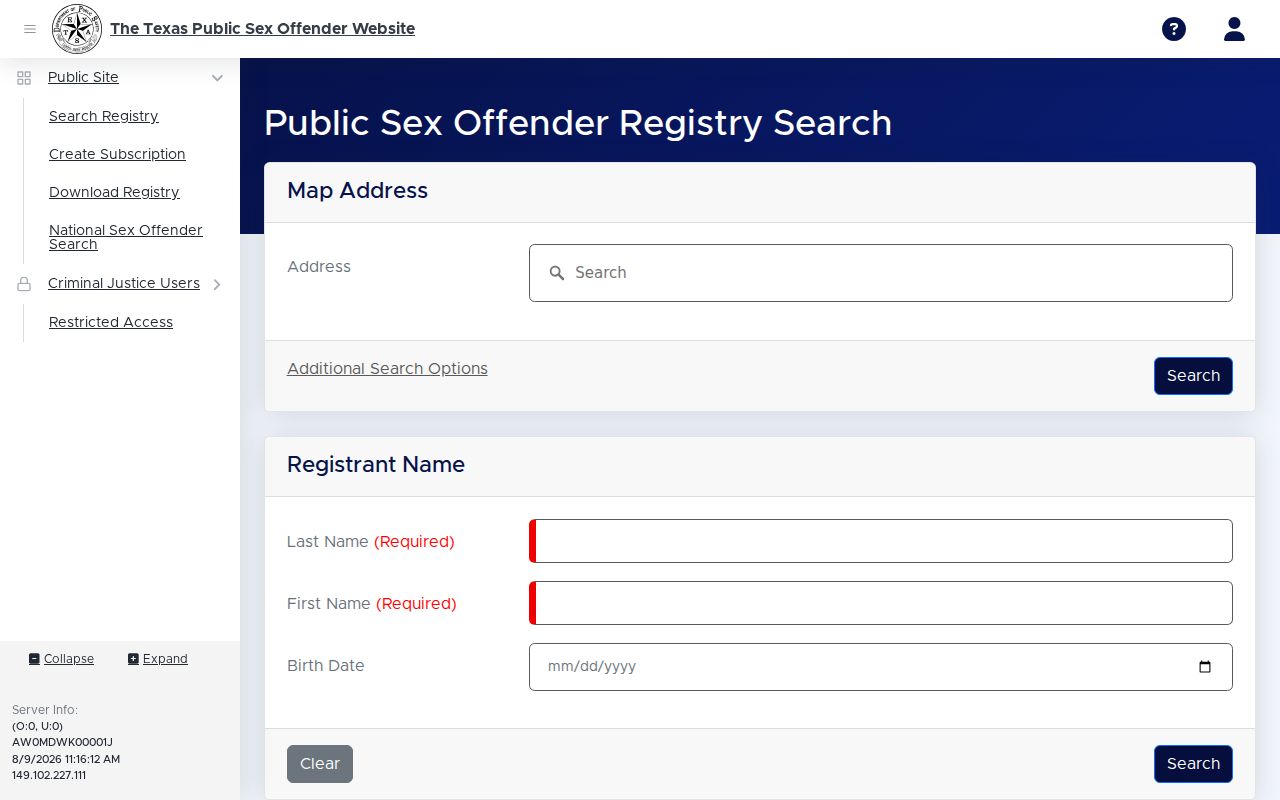
The blank official form avoids exposing a private person's profile while showing the controls a Duval County searcher will use.
A mapped view is available from the Texas registry landing and map interface.
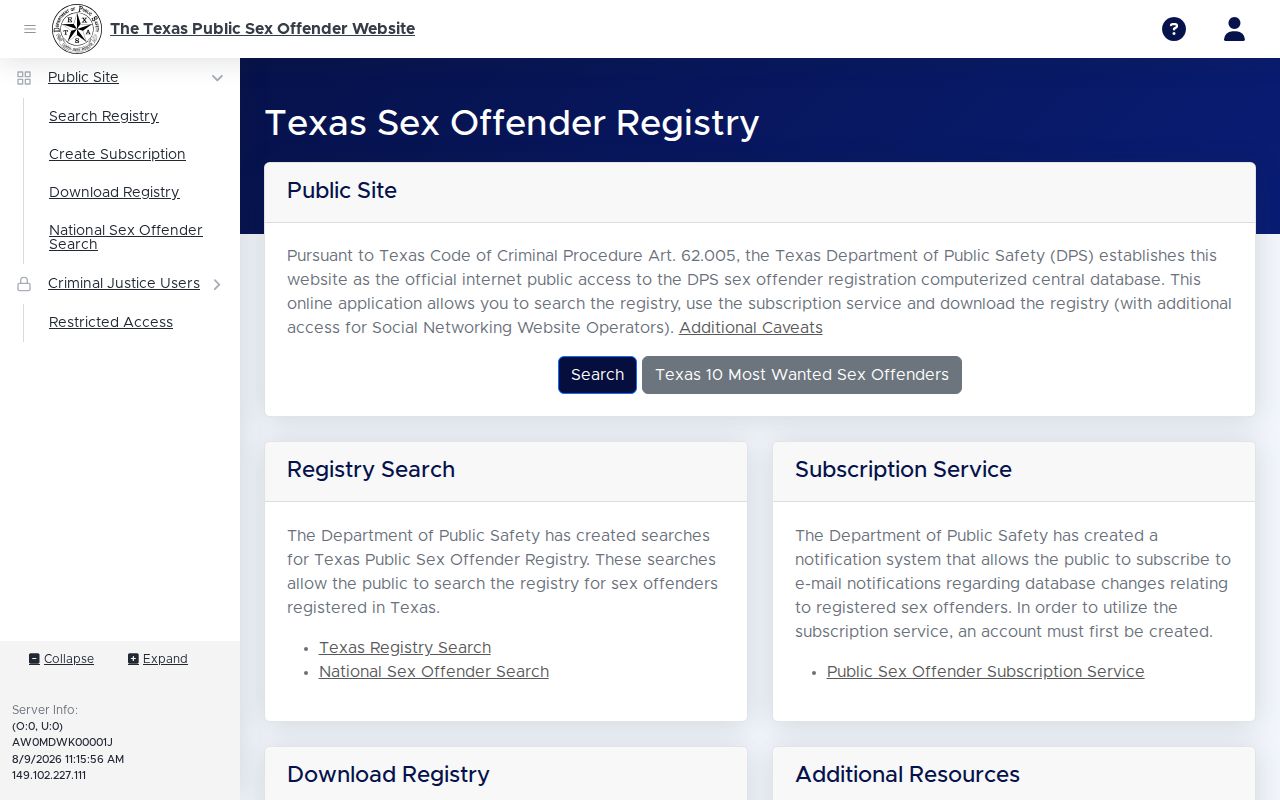
Map results are geographic leads. They do not prove where anyone is at the moment or where an offense took place.
Texas Public Sex Offender Registry Searches
Use the route that matches the question, then narrow the result with more than one field. A partial-name coincidence is not enough to identify someone. Check permitted descriptors and aliases on the state profile before drawing a conclusion. The DPS registration program page explains the official Texas system behind the public search.
- Open the DPS registry directly and review its current terms or warning.
- Choose a name search for a known person or a location search for a Duval County address.
- Enter the most complete details available and select Duval in the county control when using the county route.
- Open a result only as needed, then compare the photograph, descriptors, alias, reportable offense, status, and update information.
- Repeat the search through NSOPW if the concern crosses Texas borders, and return to the state source for profile details.
- Report a factual concern about noncompliance to the proper city authority or sheriff without confronting the person.
| Field | Use | Search note |
|---|---|---|
| Last and first name | Person search | Try documented spelling and review aliases |
| Address | Location or radius search | Use the complete address when known |
| City and ZIP | Local area filter | Useful for San Diego, Freer, or Benavides |
| County | Countywide filter | Select Duval |
| Map location | Geographic browsing | Do not infer real-time presence |
| Notification signup | Proximity or update alerts | Availability appears on the current state service |
Duval Name or Address Search
A name search and an address search answer different questions. Use a name when checking a known identity, spelling variants, or aliases. Use the location controls for awareness near a home, school route, or other place in Duval County. Neither route supplies a complete criminal history. The registry is limited to people and data made public by the sex-offender registration laws.
“No results” only means that the submitted fields produced no public match at that time. It does not rule out another spelling, another jurisdiction, a nonpublic juvenile matter, or a pending update. Likewise, a pin near an address does not show that the listed person is present there now. Read the state profile, its address type, and its last update before using the result for a personal or family safety decision.
Registry Profiles: What They Show
A public Duval County registry profile combines identity descriptors with the reportable offense and registration status. DPS collects more data than it publishes. Social Security numbers, driver's-license numbers, phone numbers, online identifiers, employer information, victim identities, and certain juvenile information remain nonpublic.
| Identity | Name, aliases, date of birth, sex, race, and physical descriptors. |
|---|---|
| Photograph and location | State-published image and address or geographic information allowed for public display. |
| Reportable offense | Offense, victim-age information where public, conviction date, and disposition. |
| Registration status | Risk or compliance labels, dates, and verification or update information. |
| Supervision | Public probation, parole, or other supervision status when displayed. |
| Other descriptors | Aliases, vehicles, scars, marks, or tattoos when collected and shown. |
The offense description reflects the reportable conviction or adjudication. A Texas risk label comes from an assessment process and is not the same thing as the federal tier terminology used elsewhere.
Registration Levels and Duties in Texas
Texas uses low, moderate, and high risk labels in assessment and community-notification settings. Duration, however, follows the reportable offense and Chapter 62 rather than a simple federal Tier I, II, or III chart. Registrants must verify as required and promptly report specified changes. Failure to comply can lead to felony prosecution.
| Texas category | General duration | Public-use caution |
|---|---|---|
| Listed lifetime offenses | Lifetime | Verify offense and date rules under article 62.101 |
| Other reportable convictions or adjudications | Often ten years after release or discharge | Adult, juvenile, and multiple-offense calculations differ |
| Federal or out-of-state duty | Period required by governing law, subject to Texas law | Seek an official duration determination |
Texas registration began on September 1, 1991, and later changes made the law retroactive in specified circumstances involving older conduct and later justice-system status. Do not calculate an end date by simply adding ten years to a conviction date.
The official Texas Code of Criminal Procedure Chapter 62 contains the governing duties and public-information rules.
The statute is the source for legal duration and duty questions when a profile summary is not enough.
Cross-State Duval Registry Checks
The National Sex Offender Public Website supplies the federal cross-state layer. It is useful when a person moved, an address sits near a state line, or the relevant jurisdiction is uncertain. NSOPW aggregates participating jurisdictions, but the originating state or territory remains the best source for profile meaning, legal duties, and updates.
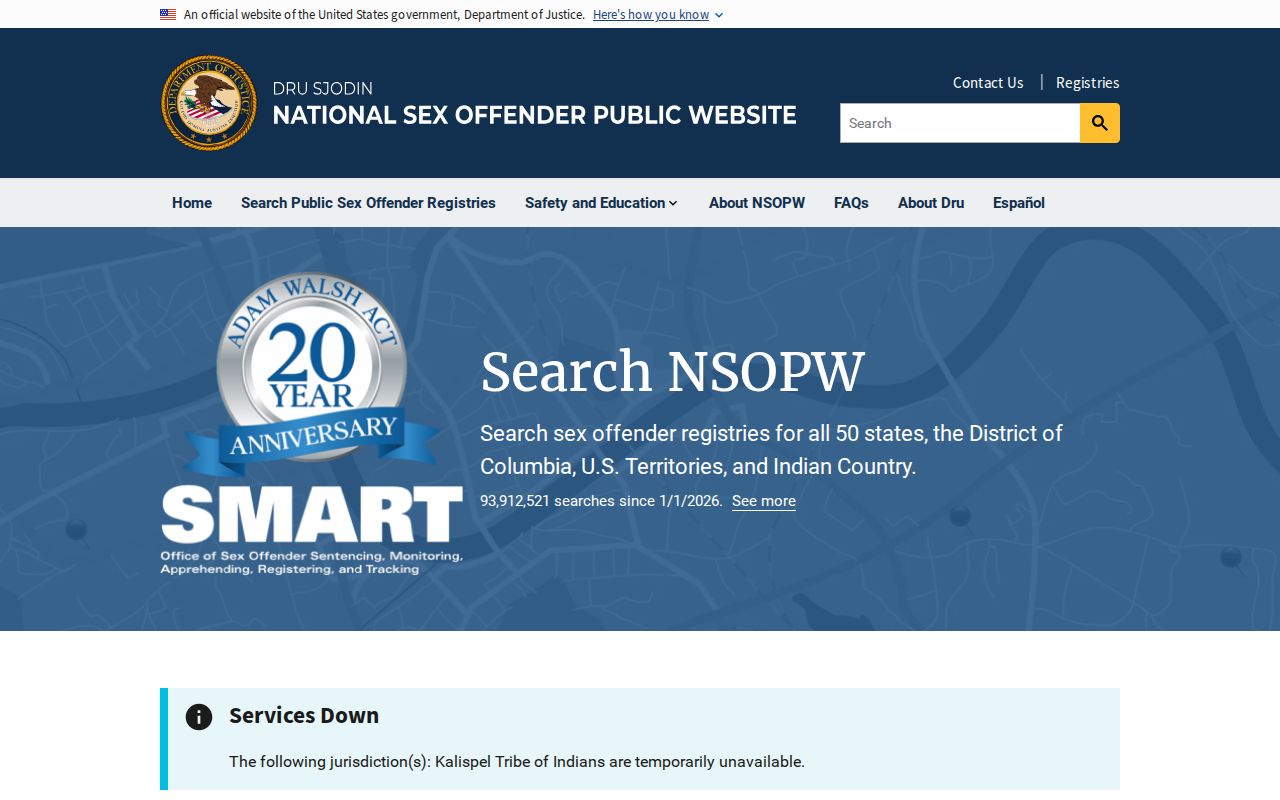
Use the national result to identify the reporting jurisdiction, then verify the details on that jurisdiction's official registry.
For a suspected Duval County compliance issue, report a factual observation to the registering city agency or sheriff. Include the state registry identifier and what was observed. Do not confront the person, enter private property, or post unverified claims. Emergencies belong with 911.
Duval Registry Awareness Alerts
The current Texas registry interface may offer notification signup for proximity or profile updates. Treat an alert as a prompt to open the official Duval County registry result again. Registration data can change after a move, verification, correction, or new report from a local authority. Save the date, location settings, and radius used so a later search can be compared on the same terms.
Texas also describes postcard notice when a high-risk registrant or civilly committed sexually violent predator moves into a community, and schools may receive notice when required. Those notices do not replace a fresh state search. They are separate community-awareness channels triggered by the legal classification and move information available to the registering authority.
Using Registry Information Lawfully
Registry records support personal and family safety and community awareness. They do not authorize threats, harassment, trespass, or vigilantism. Confirm the profile's date and address type, and distinguish a reported address from proof of current physical presence. High-risk moves or civilly committed sexually violent predators can trigger community postcard notice under the Texas framework, and schools may receive notice when the law requires it.
Misuse warning: Texas Code of Criminal Procedure Chapter 62 governs registry publication, and using registry information to harass, threaten, trespass, or commit a crime can lead to criminal or civil consequences.
When a record appears outdated, send the concern to the correct registering authority. Give objective facts and the registry identifier. The authority can review compliance; a member of the public should not try to investigate or enforce registration duties personally.