
San Diego Criminal History Checks
A useful San Diego search starts with the type of event, not a broad request for every record about a name. City citations may remain with a municipal custodian. A Sheriff incident or booking belongs with the Sheriff's Department. Filed misdemeanors and felonies move to different Duval County clerks. DPS holds the statewide criminal-history layer after required reports arrive.
- Read the citation, report, bond paper, or notice to identify the issuing agency and court.
- Confirm the current San Diego municipal custodian through city hall when the event is city-level.
- Call the Sheriff for county custody or request the incident and booking record from the agency that created it.
- Use the County Clerk for a filed misdemeanor and the District Clerk for a felony cause.
- Use DPS for public statewide conviction or deferred-adjudication data, then verify against the local judgment.
Keep the full legal name, date of birth when appropriate, date range, location, report or cause number, and desired format ready. These facts reduce false matches and help staff locate a San Diego record that is not indexed by a public name box.
San Diego Records Hub
Most of the local justice chain is concentrated at 400 E. Gravis Street. The District Clerk, County Clerk, County Attorney, District Attorney, and district court functions all operate at the courthouse. That concentration is convenient, but one counter cannot retrieve every San Diego criminal record. The accusation level controls the route.
The 229th Judicial District Court profile identifies the district court and its San Diego coordinator.
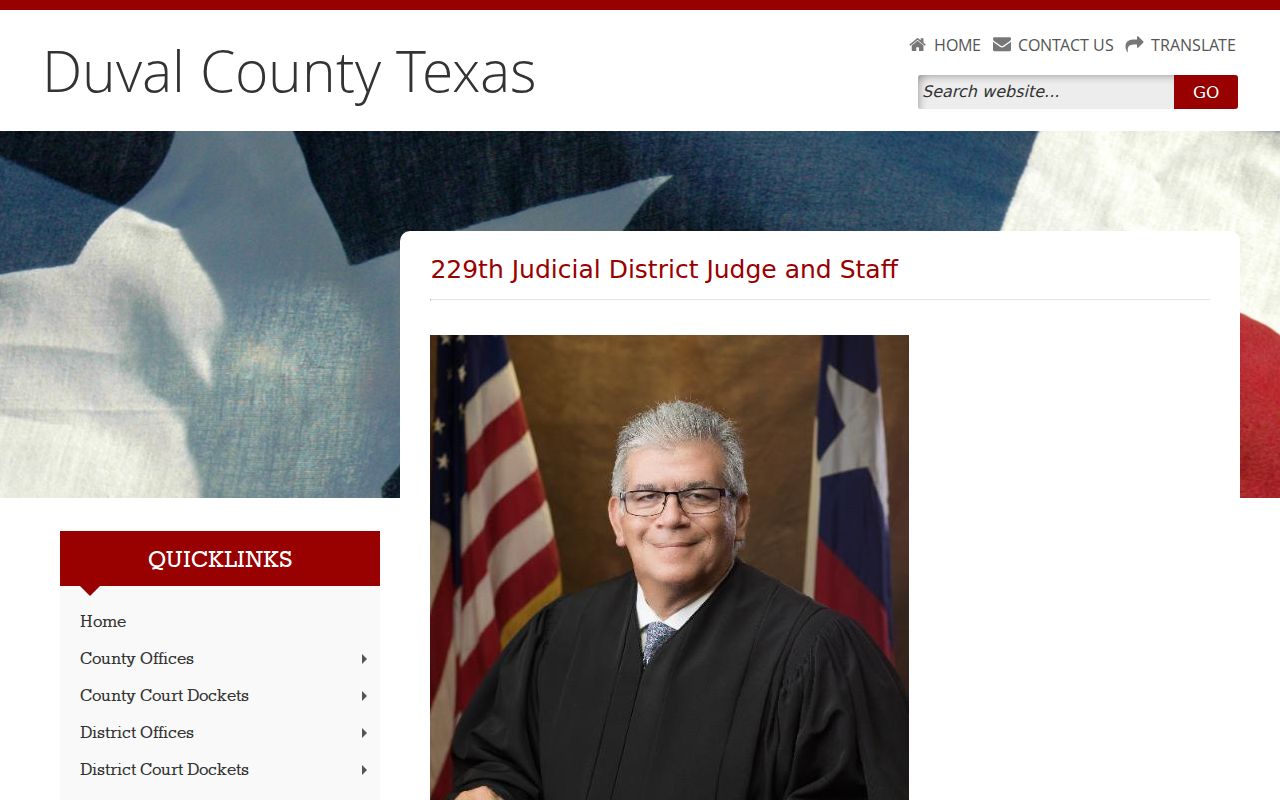
The court serves Duval with Jim Hogg and Starr counties, while the San Diego coordinator is the practical local contact for settings and procedures.
District Clerk
400 E. Gravis St.
San Diego, TX 78384
361-279-6239
Felony files and certified dispositions
County Clerk
Courthouse first floor
San Diego, TX 78384
361-279-6272 or 6274
Class A and B misdemeanor files
The District Clerk also receives expunction petitions. After the 2025 implementation of Senate Bill 1667, its official page began listing local and state agencies that may need proposed expunction orders, including the clerks, prosecutors, Sheriff, probation, DPS, TDCJ, and the Office of Court Administration. The page warns that the list may not be exhaustive. The 2025-26 county budget provides a second official roster for the local justice offices. That practical San Diego posting does not decide eligibility, but it helps identify record holders once the proper legal route is known.
Records at the San Diego Police Department
The official sources did not verify an independent San Diego police records portal, request form, or municipal case-search page. That gap should not be read as proof that no city record exists. Confirm the current municipal custodian through city hall, then ask which agency created the report. For county jurisdiction, use the Duval County Sheriff's Department as the fallback.
A focused written request should identify the incident or report, date and time range, location, involved agency, known subject, report number if available, and whether inspection or a copy is sought. Body-worn-camera requests require the date and approximate time, a specific location, and at least one known subject name under Texas law. San Diego requesters should not send a city request to a court clerk and expect an officer narrative.
Verify San Diego Texas Records
Search engines strongly favor San Diego, California. Confirm every result before sharing personal details or paying a fee. The local county domain is co.duval.tx.us, the ZIP is 78384, and verified local numbers use the 361 area code. A Florida result for Duval County is also wrong for this project.
Add “Texas,” “Duval,” or “78384” to the search phrase. Better yet, begin from the official Duval County directory and follow its department links. This small step prevents requests from going to an unrelated city or county with the same name.
Cross-check the office title as well. San Diego's District Clerk, County Clerk, Sheriff, and two prosecution offices have different duties even when search results place them near one another. Use official Census place data for San Diego-specific geography and the Duval County QuickFacts profile only for county-level context.
Note: A polished portal is not proof of jurisdiction; verify the Texas county domain, office address, and 361 telephone prefix first.
Booking and Arrest Records in San Diego
San Diego arrests can create several records. The arresting agency owns the incident narrative. The Duval County Jail creates the booking entry, custody data, fingerprints, photograph, charges, holds, and bond lines if the person is booked there. A judge or magistrate creates the bond and warning record. Later, the prosecutor and clerk create a court cause if charges are filed.
No official public Duval County inmate roster or daily booking portal was located. For current custody, call the Sheriff at 361-279-6209 during office hours or dispatch at 361-279-3351 after hours and ask for the proper custody-information channel. Dispatch is not a round-the-clock records counter. The County Court's occasional In Jail Supplement can provide a clue about set misdemeanor matters, but it is not a complete booking list.
The Sheriff's official contact page identifies the San Diego jail and law-enforcement fallback.
For a fuller discussion of agency, jail, and court layers, use the county arrest search.
San Diego Jail Record Route
The courthouse and Sheriff/Jail sit at separate addresses only a short distance apart. Court records are at 400 E. Gravis Street. Sheriff and jail records are at 401 E. Collins Avenue. The physical closeness can hide the legal split: the clerk does not own the booking sheet, and the Sheriff does not own the signed judgment.
If a family member cannot be located after a San Diego stop, first identify the arresting agency. Then ask the Sheriff about county booking. Check a city or justice court if the papers show a fine-only citation. Move to the County or District Clerk only after a prosecution is filed. TDCJ is not the first locator for a fresh local arrest.
The San Diego Municipal Court File
A verified independent San Diego municipal case-search page was not found. Fine-only city-ordinance and state-law matters may remain at the municipal level, so use the issuing citation to identify the current custodian. County clerks should not be expected to hold a city matter that never advanced to county prosecution.
| Court name | Confirm the current San Diego municipal custodian through city hall. |
|---|---|
| Case types | City ordinances, traffic matters, and eligible fine-only state-law cases. |
| Lookup route | Citation details and direct clerk contact; no verified public city portal was located. |
| Useful fields | Name, citation or case number, issue date, offense, appearance date, and status. |
| Copies and fees | Ask the current custodian; no official San Diego fee schedule was located. |
A municipal citation is not the same as a Duval County felony or Class A/B misdemeanor file. If the citation names another court, follow that court rather than assuming the San Diego municipal route.
Read San Diego Criminal Dockets
Duval County publishes dated District and County Court calendars. District links include Criminal Docket, Add-on, and Trial Docket. County links include criminal settings, add-ons, and some In Jail Supplements. These calendars help a San Diego searcher find a setting date or cause number, but they do not replace the complete court file.
The Duval County Attorney prosecutes misdemeanors from the San Diego courthouse.
The official County Attorney page shows that local prosecution office.
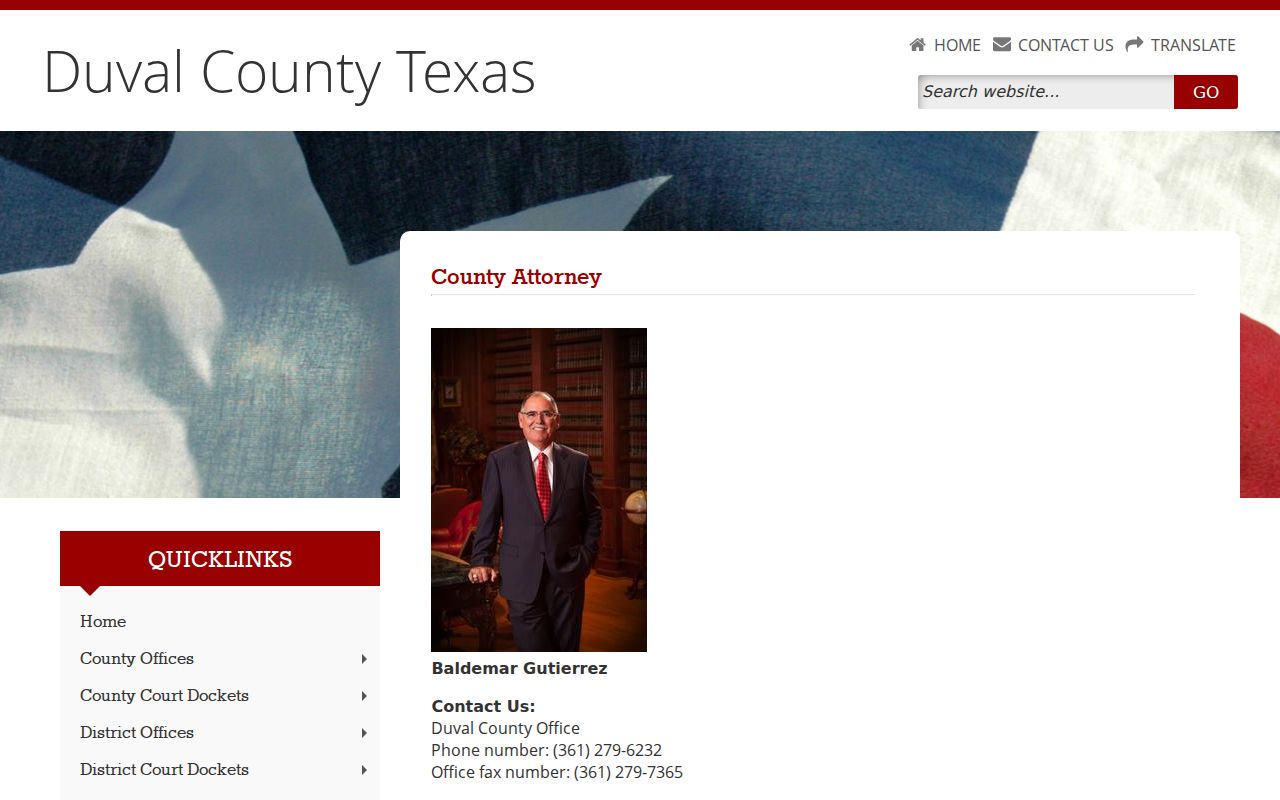
The prosecutor's office may help explain the case level, but the County Clerk remains the custodian of filed misdemeanor pleadings and judgments.
Read a calendar as a snapshot. A listed setting does not show the full motion history, plea paper, signed order, or final sentence. Use the cause number from the calendar to request the clerk's register or docket sheet, then select the needed papers. If the purpose is to correct a state criminal-history entry, ask for the certified disposition rather than relying on an online docket image.
How San Diego Records Reach the County
A city incident begins with the responsible law-enforcement agency. Booking adds a jail custody record. If prosecutors file a misdemeanor or felony, the appropriate clerk opens a cause. The clerk later reports the disposition to DPS for the statewide criminal-history chain.
Record flow: San Diego law enforcement › Duval County Courts › Texas Department of Public Safety
The flow is not instant. A jail allegation can differ from the filed charge, and a dismissal may take time to reach DPS. When a state entry lacks the final outcome, obtain a certified disposition from the San Diego courthouse and use DPS Error Resolution. An ordinary calendar printout may not be enough.
The District Attorney profile identifies the felony prosecution office in San Diego.
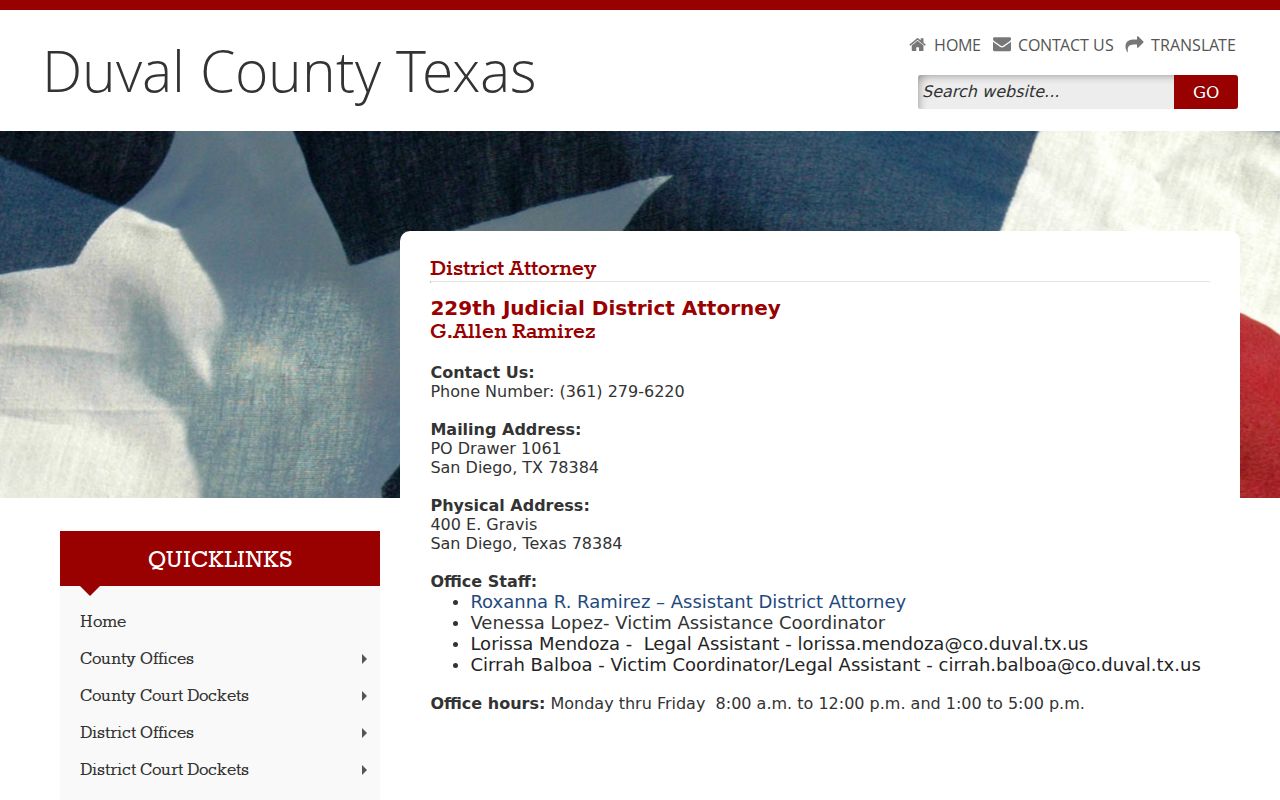
This felony prosecutor is part of the local chain, while the District Clerk retains the public cause file.
San Diego Misdemeanor Court Context
The constitutional County Court handles Class A and B misdemeanors and limited judicial duties. Its case records remain distinct from fine-only city matters and from felonies in the 229th District Court. Searchers should match the accusation level to the court before requesting records.
The official County Judge page provides the local County Court context.
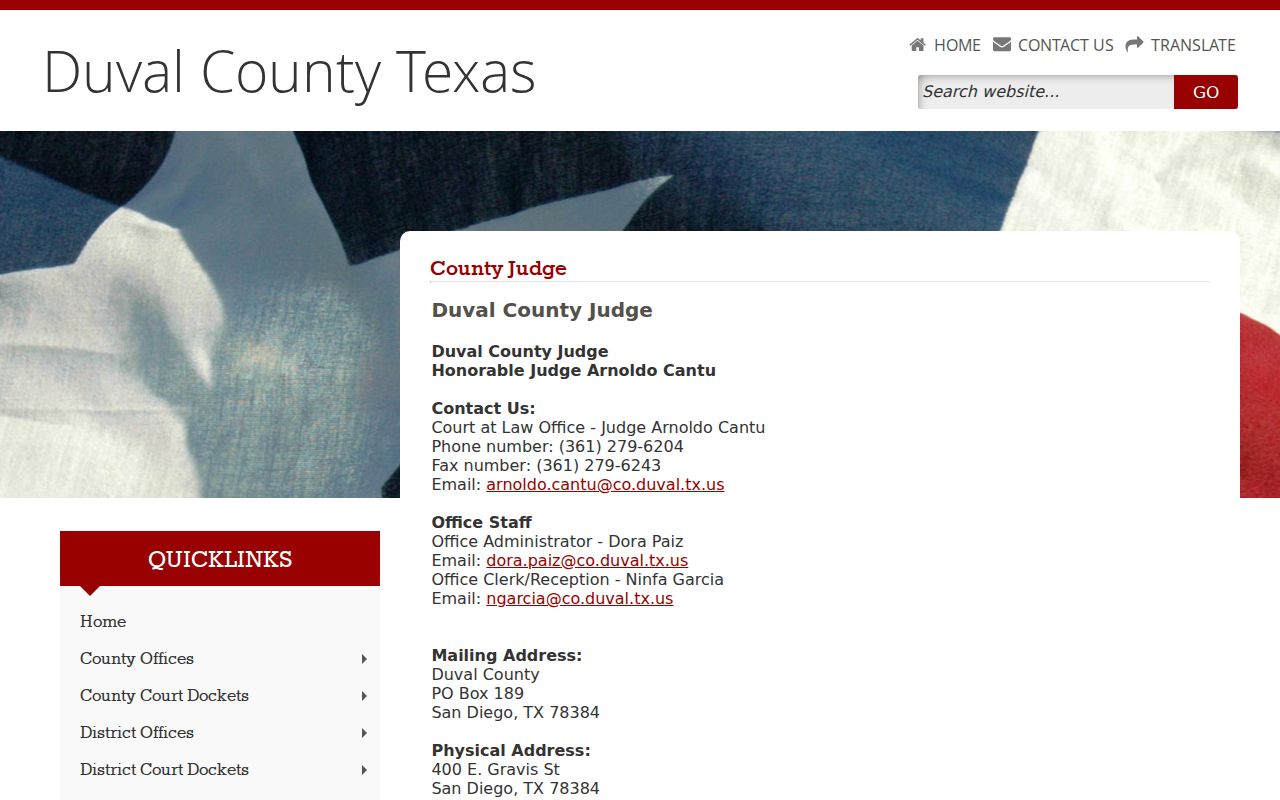
The County Clerk, not the judge personally, is the starting point for copies, docket sheets, judgments, and certified misdemeanor outcomes.
Fine-only cases can remain with a municipal or justice court, so they may not appear in the County Court calendars at all. At the other end of the scale, a federal prosecution from the area belongs to the Southern District of Texas and PACER. San Diego's courthouse cannot retrieve that federal docket. The court name printed on a notice is often the fastest way to avoid searching the wrong layer.
Plan a San Diego Clerk Visit
Several San Diego criminal-court offices publish split weekday hours of 8 a.m. to noon and 1 p.m. to 5 p.m. The County Clerk lists continuous 8 a.m. to 5 p.m. hours. Call the exact office before travel, especially near noon. Ask whether the file is on-site, archived, or available through iDocket and whether copies can be sent.
Bring the cause number when known. If not, give the full name, likely court level, and date range. Ask about search, page, and certification fees because no verified current criminal-copy fee was found. Published sources did not establish parking, phone, recording, or locker rules, so those details should be confirmed rather than assumed.
Language help also deserves an advance call. The 229th District Court identifies a court administrator and interpreter who serves Duval, Jim Hogg, and Starr counties. Contact the San Diego coordinator before a hearing or records visit rather than assuming an interpreter will be at a clerk counter. An access accommodation helps a person communicate with the court; it does not permit staff to discuss the merits of a case or provide legal advice.
San Diego Record Access Rules
The Texas Public Information Act applies to city and county agency records, but it does not make every detail public. Active investigative information may be withheld under section 552.108. Juvenile records, victim details, medical information, protected addresses, and data made confidential by another law can also be redacted. Court records follow judicial access rules as well.
Key statutes:
Texas Government Code Chapter 552 provides the public-information framework and permits defined exceptions.
Texas Government Code Chapter 411 controls criminal-history dissemination and nondisclosure.
Code of Criminal Procedure article 2B.0112 sets required identifiers for body-camera requests.
Write narrowly and request the reasonably segregable public part. The custodian may clarify an unclear request but generally may not ask why the record is wanted. For a court file, contact the proper clerk rather than sending a police-record request.