
Arrest Records in Duval County
An arrest record begins with the agency that takes a person into custody. In Duval County that may be the Sheriff's Department, Freer Police Department, a DPS Highway Patrol officer, a constable, or another authorized agency. The officer's incident report describes the event and the arrest-time allegation. If the person enters the county jail, the sheriff creates a separate booking record with intake details, charges, holds, bond lines, fingerprints, and a photograph. The magistrate then adds warnings, probable-cause findings, and bond terms.
Those records answer different questions. A police report tells what the officer alleged. A booking sheet documents custody. A court file records the charge that the prosecutor actually filed and the final result. DPS may later connect a fingerprint-supported arrest cycle to a reported disposition, but Texas does not require every Class C arrest to enter that system. No single Duval County arrest search covers all four layers.
The official Duval County Sheriff page shows the local jail and law-enforcement contact used for custody questions.
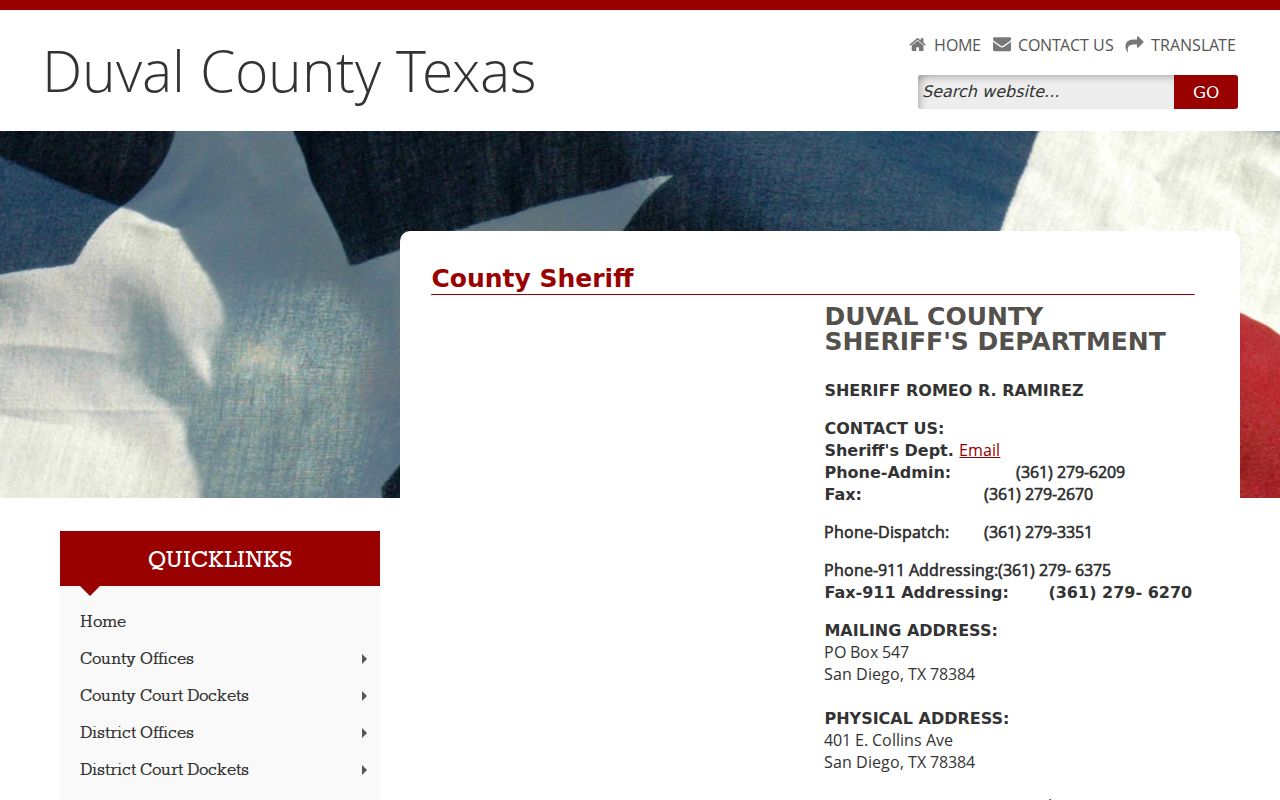
That county page is the key local starting point because Duval publishes no official searchable inmate roster or daily intake list.
Duval Arrests Without a Portal
Duval County has not posted a county-run inmate search, daily booking log, or public booking-photo search. For a same-day question, call the Sheriff's Department at 361-279-6209 during its weekday office hours of 8 a.m. to noon and 1 to 5 p.m. Dispatch at 361-279-3351 is the official after-hours line found in county sources. Ask dispatch for the correct custody-information channel. It is not a round-the-clock records counter.
Give the person's full legal name and date of birth when appropriate, plus the likely arresting agency and time of contact. A person can be released before a court file appears. A warrant arrest may also point to an older cause held by another court or county. Record the spellings tried and the time of each call. If the sheriff cannot locate the person, contact the agency that made the stop before jumping to a state-prison locator.
Duval County Arrest Lookups
A complete Duval County arrest lookup follows the record from custody to court instead of treating one source as final. Use the incident or cause number when known. Names alone can match more than one person, especially across generations in a small community.
- Call the Duval County Sheriff or dispatch for current local custody. Ask which agency booked the person and whether release or transfer has occurred.
- Check the official County Court docket page for a current “In Jail Supplement.” It is a clue for set misdemeanor matters, not a complete jail roster.
- Send a focused written request to the sheriff for the booking sheet and to the arresting agency for its incident report. Freer PD uses its own web request route.
- After charges are filed, contact the County Clerk for Class A or B misdemeanors or the District Clerk for felonies. Compare the filed charge with the arrest-time allegation.
- Use the Texas DPS public CCH search for reported public convictions and deferred adjudications. For your own fuller Texas history, use a FAST fingerprint personal review.
- After a prison transfer, switch to TDCJ Inmate Information Search. Use the federal BOP locator only when custody is federal.
A search for the full prosecution and judgment belongs in the Duval County court case file, not in a booking record.
Route Duval Arrest Requests
The arresting agency owns its report even if the Duval County Jail handled intake. Send a Sheriff report request to the county custodian. Use Freer Police Department's official request channel for a Freer PD event. A DPS Highway Patrol report must go to DPS, while a constable record should be routed through the county after the precinct is confirmed. San Diego and Benavides lack a verified city arrest portal in the research, so verify the active municipal custodian and use the sheriff as the county fallback.
Duval County Sheriff's Department
401 E. Collins Ave.
San Diego, TX 78384
Mail: P.O. Box 547
361-279-6209
Weekdays, 8 a.m.-noon and 1-5 p.m.
A useful request identifies the record, date and time range, location, agency, incident or booking number, and preferred format. Ask for the public portion if juvenile, victim, medical, or active-investigation details may be withheld.
Arrest Records: What They Contain
A Duval County booking sheet can link the arrest event to later custody and court activity. The public copy may omit protected information, and the precise set of released fields can vary with the request and status of the case.
| Booking identifier | Local number used to distinguish the intake transaction. |
|---|---|
| Date, time, and place | When and where the arrest or booking occurred. |
| Agency and report | Arresting organization, officer where public, and incident number. |
| Initial allegations | Charge or warrant basis recorded at arrest, which may later change. |
| Custody and bond | Holds, bond type or amount, magistrate, and release or transfer status. |
| Identifiers | Permitted descriptors, photo, fingerprints, and local or state cross-references. |
| Court link | Cause, warrant, or court reference when one has been assigned. |
Do not infer guilt from a charge label or booking photograph. The filed information, indictment, judgment, or dismissal may tell a different story.
Duval Arrests After Booking
During intake, jail staff log identity and property, take fingerprints and a photograph, record charges and holds, and conduct health and suicide-risk screening. Housing classification follows. Texas Code of Criminal Procedure article 15.17 generally requires an arrested person to be brought before a magistrate without needless delay, ordinarily within 48 hours. At that hearing, the magistrate gives required warnings and addresses probable cause and bond.
The paper trail can change at each stage. An officer may use a broad arrest-time allegation. Jail data may show more than one warrant or hold. A prosecutor can decline, reduce, or change a charge before the clerk opens a cause. That is why two official records viewed on the same day may disagree without either being fraudulent. Compare the report date, booking number, warrant issuer, and court cause before deciding that a record is wrong.
Recent Duval County Bookings
The county's official court pages publish dated calendars rather than a live Duval County booking log. The County Court docket archive sometimes labels a calendar “In Jail Supplement.” That can show which jailed misdemeanor defendants have a court setting, but it excludes people without that type of case or setting. It also may remain available after custody changes.
The in-jail docket is therefore a bridge between a booking and a filed case, not proof of current detention. For a fresh arrest, the sheriff phone channel remains primary. For an older case, ask the proper clerk for the docket sheet and disposition. No absence from a calendar proves that no arrest occurred.
The FBI Crime Data Explorer can provide agency-level reporting context when the selected year and reporting completeness are disclosed.
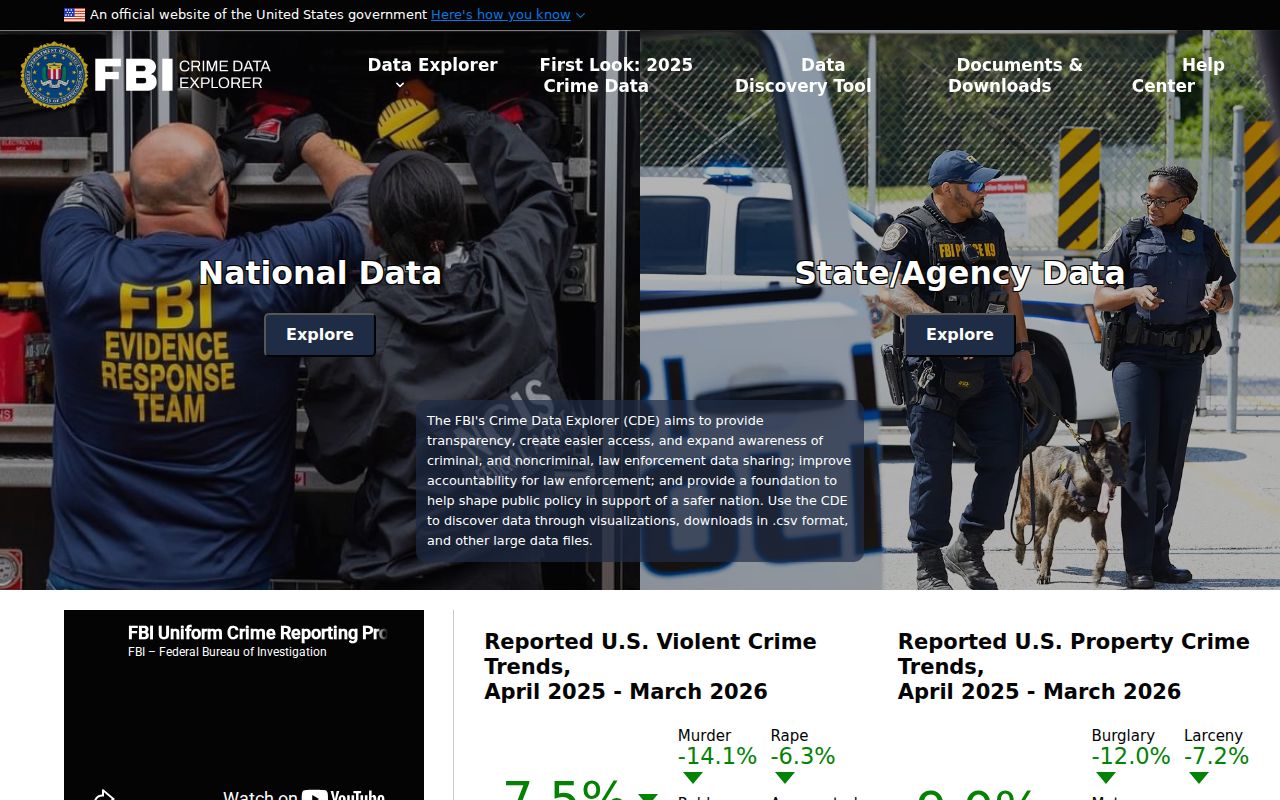
Because small-agency months can be missing or suppressed, the federal tool should not be treated as a live list of Duval County arrests.
Duval Jail Screening Records
The Texas Commission on Jail Standards issued an official notice of noncompliance after a December 30, 2025 inspection of the Duval County Jail. The notice, dated December 31, identifies findings tied to approved mental-disability and suicide-prevention screening and staffing provisions. It is a system-level oversight record. It does not identify a person in custody or answer whether a given arrest led to booking.
Read the state notice only for its stated findings. Do not infer facts about an individual intake or extend the findings beyond the inspection. A request about one Duval booking must still go to the sheriff and may contain protected medical or screening information. The inspection record instead shows why jail administration documents and personal booking records have different access rules and purposes.
When Duval Custody Moves
A Duval County jail record stops being the best locator after a sentenced person transfers to state prison. The TDCJ Inmate Information Search accepts a last name with optional first name, or a TDCJ or SID number. Gender and race may narrow the results. A public result can show the prison unit, sentence data, county of conviction, projected release, and parole fields. It does not show a new Duval booking or county-jail housing location.
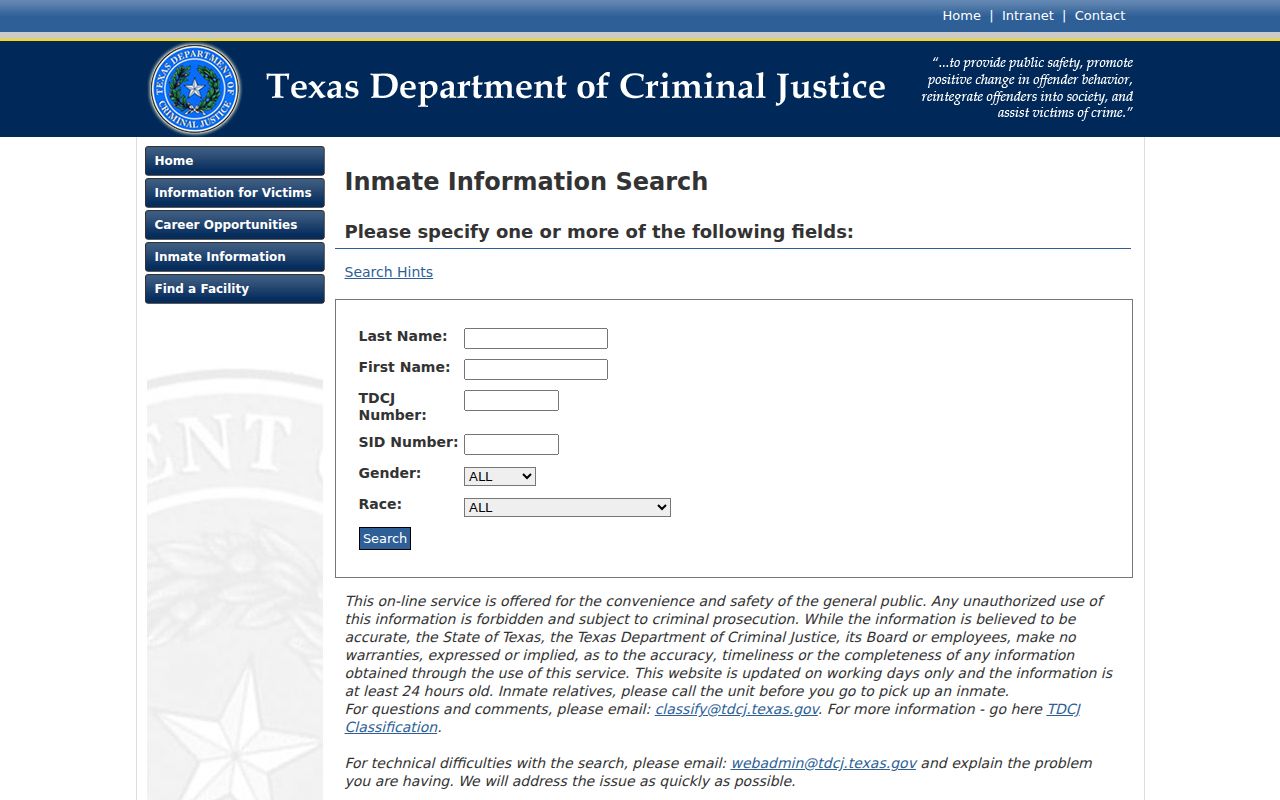
Use the identifier route when possible because similar names can produce the wrong state-prison match.
For public records held by TDCJ, the agency explains its Texas Public Information Act request process and possible confidentiality limits.
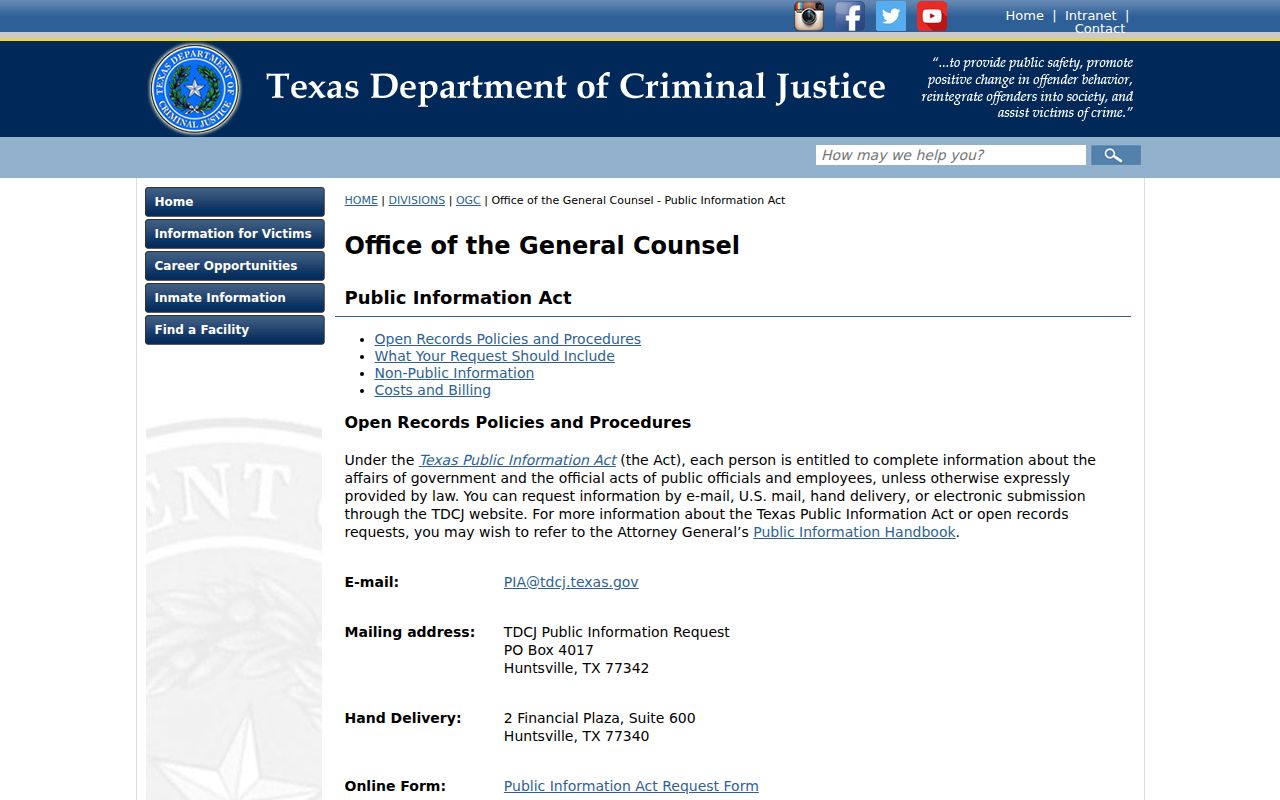
That request channel is for TDCJ records, not the sheriff's booking sheet or a Duval County police narrative.
Federal custody uses the Federal Bureau of Prisons inmate locator, a separate system from both Duval and TDCJ.
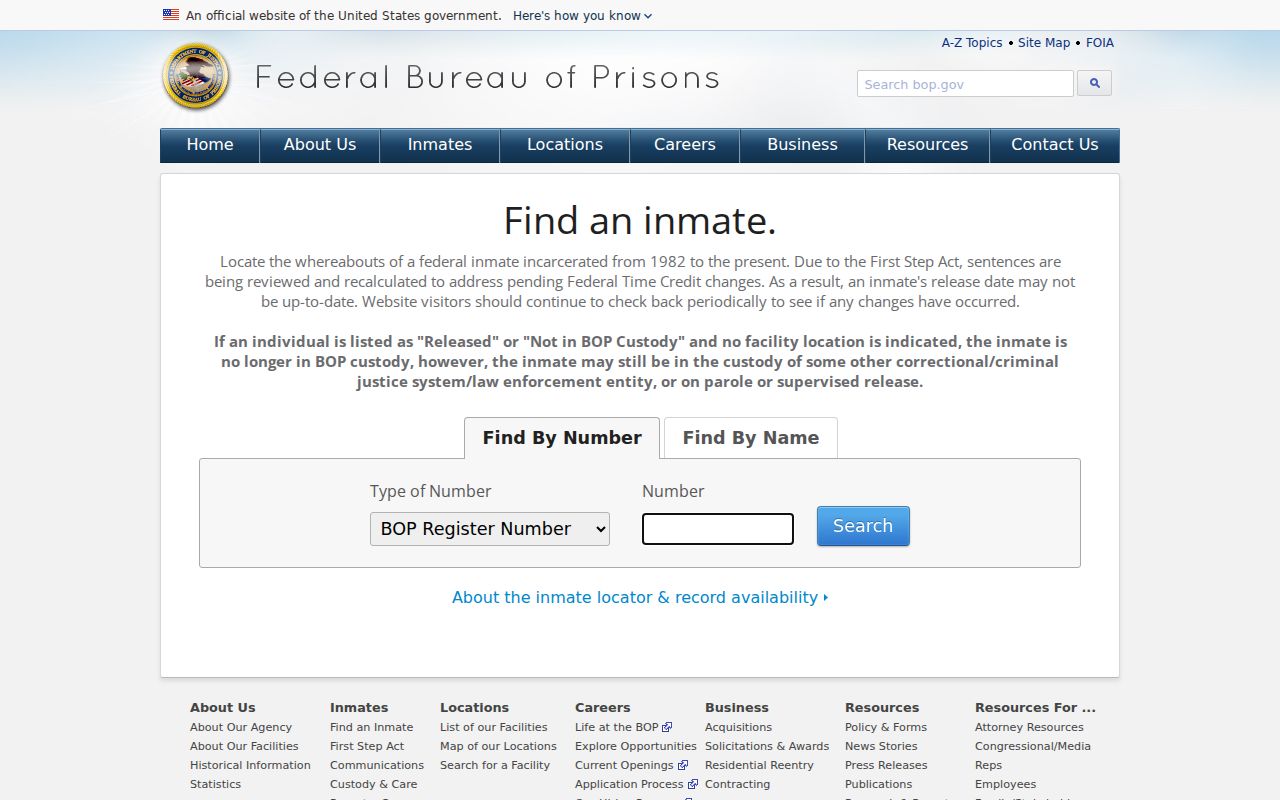
A federal result should be traced to the federal court case, not to a Duval County clerk file.
Request Duval Booking Records
A written request under the Texas Public Information Act is the main fallback when a phone check or docket page cannot supply the needed Duval County arrest record. Describe a booking sheet, custody entry, incident report, dispatch record, 911 recording, or body-camera recording with a focused date range. Include the incident number, location, agency, and desired paper or electronic form. The agency may clarify an unclear request but generally may not ask why the record is wanted.
Body-camera requests have special identification rules. They must include the date and approximate time, the specific location, and at least one known subject's name. Active-investigation material, juvenile records, victim-identifying data, and medical or screening information may be withheld or redacted. If estimated charges exceed $40, state law allows an itemized estimate. Duval County has not published a sheriff-specific copy fee or firm turnaround promise, so confirm both before ordering.
Arrest Records vs Conviction Records
Duval County arrest records document an allegation and custody event. A conviction record comes from the court after a plea or finding of guilt. DPS CCH may connect the two after agencies submit fingerprints, prosecutor action, and the court disposition. A delay or rejected report can leave the state entry incomplete even when the Duval clerk already has the final judgment.
| Point | Arrest record | Conviction record |
|---|---|---|
| Created by | Arresting agency and jail | County or District Court |
| Shows | Allegation, booking, bond, custody | Filed offense and final court result |
| Best source | Sheriff or arresting agency | County Clerk or District Clerk |
| Possible ending | Release, transfer, or later filing | Dismissal, acquittal, plea, or verdict |
For a missing state disposition, obtain a certified court copy bearing the official seal and use DPS Error Resolution. An ordinary photocopy is not enough for that correction route.
Note: An arrest is not proof of guilt, and a Duval County booking may never lead to a filed charge or conviction.