
Duval County Criminal History Checks
Start by naming the record, not just the person. A current jail question belongs with the Duval County Sheriff's Department. An incident report belongs with the agency whose officer wrote it. Filed Class A and B misdemeanor cases go to the County Clerk, while felony files and certified felony dispositions go to the District Clerk. The free county docket pages can reveal a setting date or cause number. They are calendars, though, so a missing name there does not prove that no case exists.
Bring the full legal name, spelling variants, an approximate date, and a cause or report number if one is known. A date and place can separate people with similar names. Follow this order for a careful Duval County criminal records check:
- Choose the arresting agency, jail, misdemeanor clerk, felony clerk, or state repository based on the record sought.
- Browse the free Duval County docket index for a year and setting date before paying for another search.
- Use the clerk-linked iDocket service or re:SearchTX as a second view, then confirm its coverage on the live screen.
- Call the correct Duval County clerk for a manual search when the online result is thin, old, or absent.
- Request the underlying file or a certified disposition rather than relying on a calendar entry or name match.
Note: A clerk file, sheriff report, and DPS result answer different questions, even when each one refers to the same event.
Three Duval County Record Counters
Most local criminal record work converges at the official Duval County government directory. The courthouse at 400 E. Gravis Street in San Diego houses both criminal clerks and the prosecution offices. The County Clerk on the first floor keeps misdemeanor files. The District Clerk handles felony records and expunction filings. The Sheriff's Department and jail operate separately at 401 E. Collins Avenue. That one-block divide matters because court staff do not hold an officer's report or a jail booking sheet.
The county directory is shown in this official interface capture.
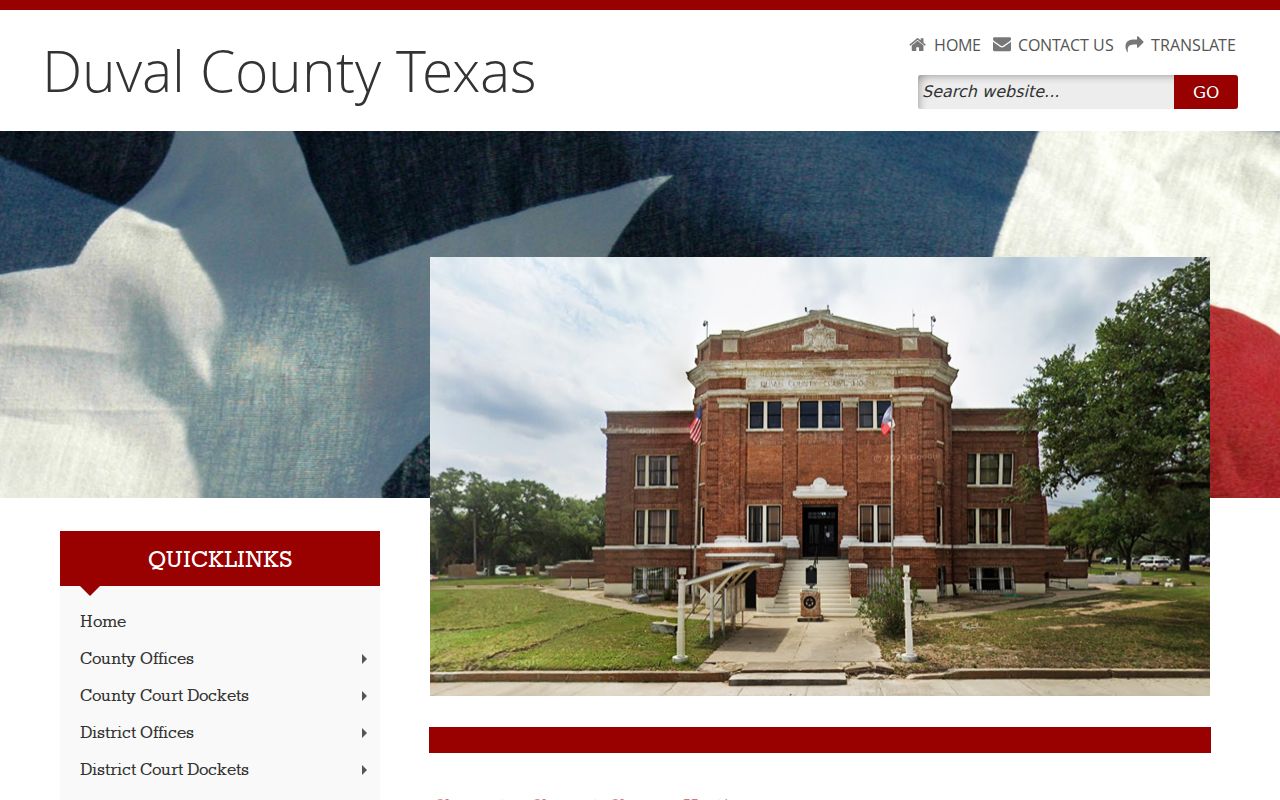
Use the office title as the routing key. The misdemeanor and felony counters have different records even though both are at the same courthouse address.
District Clerk
Felony files and certified dispositions
400 E. Gravis St., San Diego, TX 78384
361-279-6239
Monday-Friday, 8 a.m.-noon and 1-5 p.m.
County Clerk
Class A and B misdemeanor files
400 E. Gravis St., first floor
361-279-6272 or 361-279-6274
Monday-Friday, 8 a.m.-5 p.m.
Sheriff and Jail
Incident, booking, custody, and warrant routing
401 E. Collins Ave., San Diego, TX 78384
361-279-6209
Monday-Friday, 8 a.m.-noon and 1-5 p.m.
Official Background Checks in Texas
The Texas Department of Public Safety Crime Records Division maintains the Computerized Criminal History system. Its public name product returns public conviction and deferred-adjudication information reported to DPS. It is not a complete personal rap sheet. Similar names can produce a false match, and a missing local disposition can leave the statewide entry incomplete. Review the Texas Crime Records Division description before selecting a search route.
The state program hub shown below separates public name searches from fingerprint-supported personal reviews.
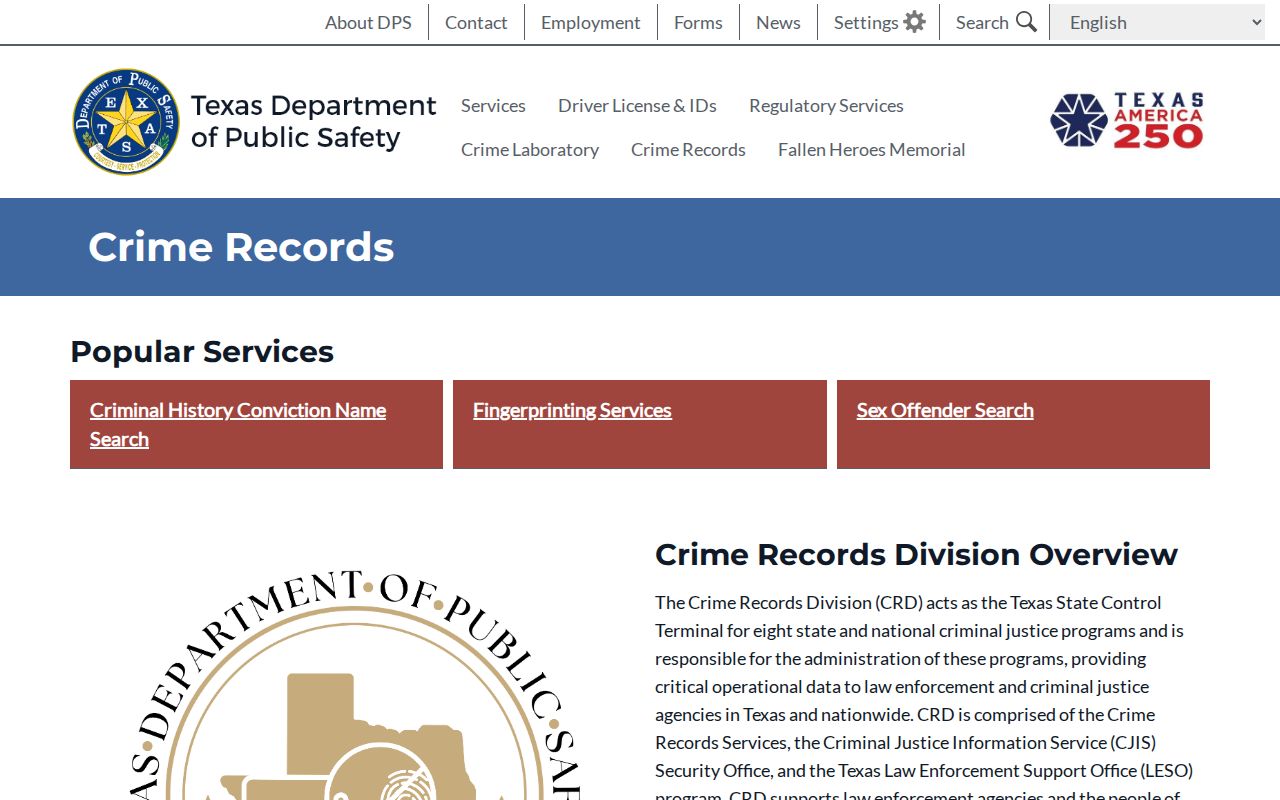
For self-review, fingerprints are the stronger identity match. DPS uses Fingerprint Applicant Services of Texas through IdentoGO by IDEMIA. DPS quotes a $15 personal review fee plus a $10 FAST fingerprint fee. Its FAQ separately quotes $10 for an offline name search, while the current online credit charge should be checked on the purchase screen.
| Official route | Best use | Published cost |
|---|---|---|
| DPS public name search | Public Texas convictions and deferred adjudications | Confirm online credit price; $10 offline name search |
| DPS FAST personal review | Your own fingerprint-associated Texas record | $15 review plus $10 fingerprint fee |
| FBI Identity History Summary | Your own federal identity-history record | $18 plus fingerprint costs |
Duval County Criminal Docket Search
Duval County publishes dated District Court and County Court criminal docket PDFs. District labels include Criminal Docket, Add-on, and Trial Docket. County labels include Criminal Docket, Add-ons, and some In Jail Supplements. These indexes are a practical free first look in a rural county. They browse by year and setting date, not through a complete countywide name box. A person can have a filed case without appearing on the one calendar being viewed.
Both clerks link iDocket, and re:SearchTX adds a statewide aggregation layer. Neither service guarantees that every Duval County image or older case appears. When a portal does not answer the question, ask the appropriate clerk to check on-site, archived, or other stored files. For a full account of charges, motions, pleas, judgment, and sentence, use the Duval County Court Case Lookup rather than treating a calendar as the case file.
| Channel | Search controls | Limit |
|---|---|---|
| Duval docket pages | Year, setting date, docket label | Calendar only, not a full case index |
| iDocket | County or court, name, cause number, dates | Live access, images, and charges can vary |
| re:SearchTX | Person or case, court, location, date | Coverage depends on participating clerks and access |
Kinds of Criminal Records
A Duval County criminal history is assembled from records created at different stages. An officer writes an incident report. The jail creates a separate booking transaction. A prosecutor decides whether and how to file a charge. The clerk then preserves the court cause and outcome. DPS links qualifying fingerprint-supported arrest cycles with prosecutor and court reports. Each layer can change on its own schedule, which is why two official results may look different on the same day.
- Incident and arrest report: the arresting agency's account of the event and initial allegation.
- Booking record: jail intake, identifiers, holds, bond, custody dates, fingerprints, and photograph.
- Court case file: filed charges, docket events, pleadings, outcome, sentence, and costs.
- DPS CCH entry: qualifying statewide arrest, prosecution, and disposition data tied to prints.
- Warrant or capias: a court command whose source file may sit with a municipal, JP, county, or district court.
- Custody or supervision record: county jail, TDCJ prison, community supervision, or parole information.
- Registry profile: Chapter 62 registration data, not a general criminal-record search.
The custodian is as important as the record label. Ask who created the document, which court received the charge, and whether the result is a calendar, a source file, or a statewide summary.
Duval County Booking Record Fallbacks
No official Duval County inmate-search page, daily booking log, or public mugshot portal was located. The best current-custody step is a call to the Sheriff's Department. The administrative line is 361-279-6209, and dispatch at 361-279-3351 is the official after-hours contact. Dispatch can route a custody question, but it should not be treated as a round-the-clock records counter. A County Court In Jail Supplement may offer a clue about a set misdemeanor matter, not a complete jail roster.
For a durable booking record, send a focused written request to the sheriff under the Texas Public Information Act. Give the full name, date range, location, incident or booking number if known, and desired format. Ask separately for the arresting agency's report because the jail may not own that narrative. The Duval County Arrest Search details the full custody and agency ladder.
Note: No official source published a local report-copy fee, response promise, visitation vendor, or jail deposit system, so confirm each item by phone.
Duval County Criminal Records: What They Contain
Texas CCH is designed to join arrest, prosecution, and disposition information for Class B misdemeanors and more serious Texas offenses. A public DPS result is narrower. It focuses on public convictions and deferred adjudications. A Duval County clerk file can hold far more about a single prosecution, while the sheriff's booking sheet captures custody details that may never appear in a final judgment.
| Name and identifiers | Legal name, aliases, date of birth, descriptors, state ID, FBI number, or transaction identifiers where law permits. |
|---|---|
| Arrest and booking | Arrest date, agency, report or booking number, initial allegations, fingerprints, holds, bond, and custody dates. |
| Charges and statutes | Arrest-time allegations, prosecutor-filed charges, offense descriptions, and cited Texas provisions. |
| Court events | Cause number, settings, motions, pleas, orders, and the event history kept by the clerk. |
| Disposition | Dismissal, acquittal, conviction, deferred adjudication, or another final court action. |
| Sentence and supervision | Custody term, fine, community-supervision order, and later TDCJ or parole data when applicable. |
Juvenile details, victim identifiers, medical data, protected addresses, and active-investigation material may be restricted. A public docket calendar should not be expected to show those fields.
Duval County FAST Record Review
A fingerprint personal review is the best choice when a Duval County resident needs to inspect their own complete fingerprint-associated Texas record. No verified IdentoGO enrollment site inside Duval County was found. Use the live locator after entering the DPS service code instead of relying on an old storefront listing. Appointments can also be arranged through the official phone channel at 888-467-2080.
The IdentoGO enrollment system is the state-designated appointment route.
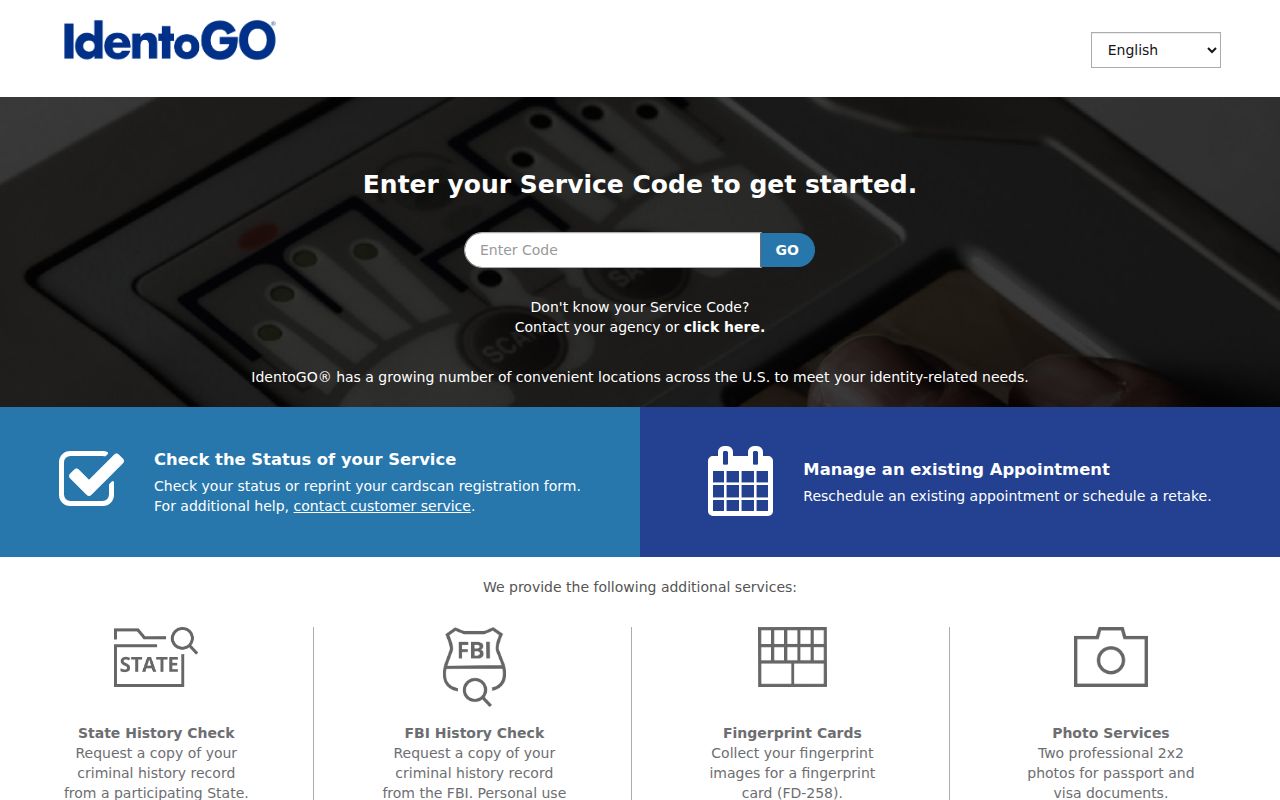
The screen helps locate a current capture site after the correct service is chosen. DPS says results take roughly ten business days after receipt, apart from postal time. Hard-card needs and local sheriff fingerprint availability should be confirmed before travel.
Texas Public Access Laws
Texas law draws separate lines around court files, police records, criminal-history data, juvenile material, and registry data. The Texas Public Information Act creates a route to request government information, but it does not override every confidentiality rule. Agencies can clarify a vague request. They may redact or withhold material protected by another law, and active law-enforcement records often raise the section 552.108 exception.
Key Texas authorities:
Government Code Chapter 552 provides the public-record request framework and prompt-production duties.
Government Code Chapter 411 limits criminal-history dissemination while authorizing public conviction and deferred-adjudication access.
Code of Criminal Procedure Chapter 55 governs expunction eligibility and orders.
Code of Criminal Procedure Chapter 62 controls sex-offender registration and public registry fields.
Code of Criminal Procedure article 2B.0112 lists the identifying details needed for a body-camera request.
A clear request should name the record, date range, place, agency, incident number if known, and delivery format. If estimated charges exceed $40, the agency may send an itemized estimate. No Duval County-specific fee table was found.
Correcting a Duval County Disposition
A dismissed Duval County case can still appear incomplete in DPS data when the disposition was never accepted or matched. The clerk with jurisdiction is responsible for reporting the court outcome. Start with the County Clerk for a misdemeanor or the District Clerk for a felony. Ask for a certified disposition bearing the official court seal. DPS says an ordinary photocopy is not enough for its error-resolution process unless the court's embossed seal appears.
The DPS criminal history error-resolution page shows the official correction route.
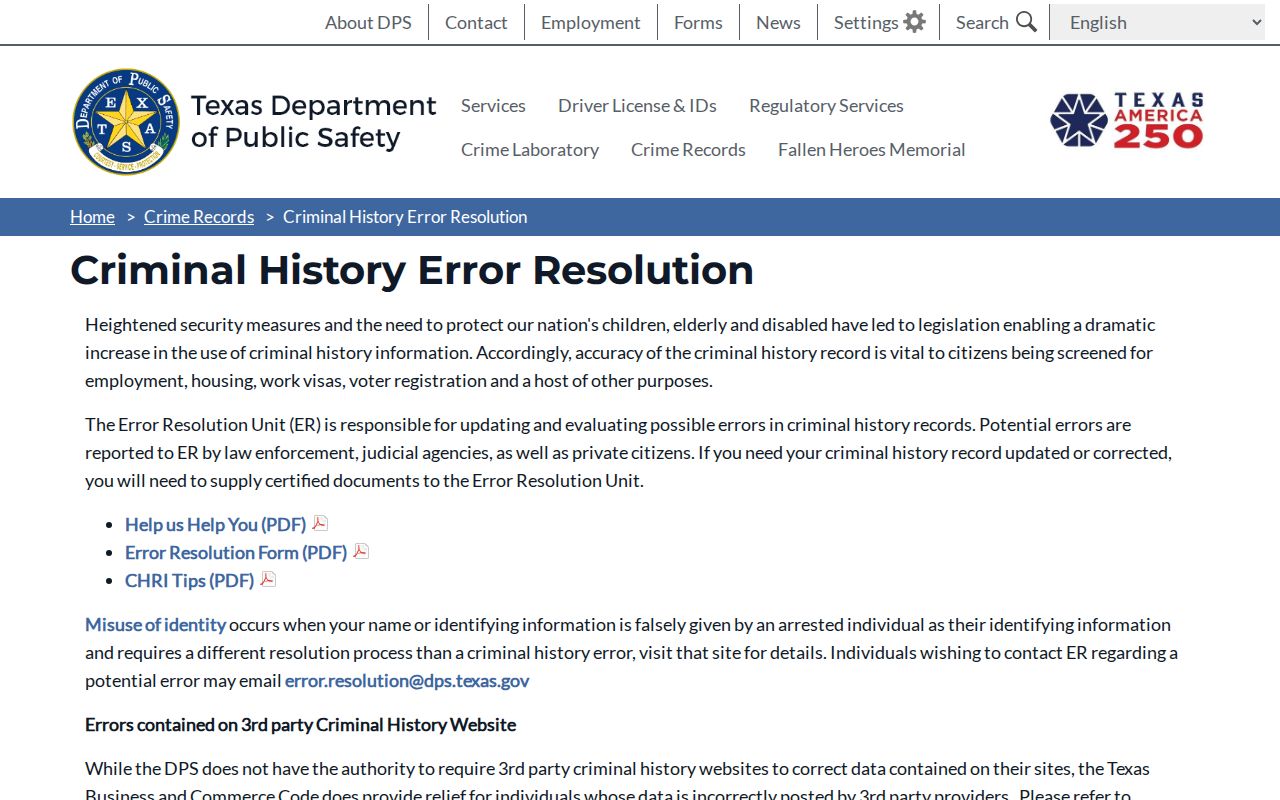
That process corrects data; it does not legally erase an otherwise valid record. If removal is the goal, expunction or nondisclosure requires a separate eligibility review and court process.
Duval County Warrant Record Search
No official public active-warrant database for Duval County was found. Begin with sheriff dispatch for routing, then identify the issuing court. A warrant tied to a filed felony may trace to the District Clerk. A county misdemeanor can trace to the County Clerk, while a citation or bench warrant may remain with a justice court or Freer Municipal Court. Secure TCIC confirmation is for law enforcement and is not a public name-search portal.
Use the cause number and issuing court when possible. A published docket can add context, but it is not definitive warrant proof. For a same-name result, do not assume the warrant belongs to the person being researched. Contact the issuing court for appearance, bond, payment, or clearance instructions and seek legal advice when needed. Sealed warrants and juvenile matters will not be shown through ordinary public channels.
- Arrest warrant
- A judicial order authorizing an arrest based on the stated cause.
- Capias
- A court command to take a person into custody, often tied to an existing case.
- Bench warrant
- A warrant issued after a missed court duty or proceeding.
- Capias pro fine
- A process used in eligible fine-only matters after judgment and noncompliance.
Restricted, Sealed & Expunged Records
Texas expunction under Code of Criminal Procedure Chapter 55 can require eligible records to be destroyed or removed. An order of nondisclosure under Government Code Chapter 411 usually blocks an eligible history from ordinary public view while preserving access for named government users. These remedies are not interchangeable. An old conviction does not vanish just because the sentence ended, and eligibility turns on the charge, outcome, dates, and statutory conditions.
Duval County's District Clerk added a practical expunction agency list after Senate Bill 1667 took effect on September 1, 2025. It names local and state recipients, including both clerks, prosecution offices, the sheriff, county probation, DPS, TDCJ, and the Office of Court Administration. The clerk warns that the list may not be complete. No official local filing fee or complete forms package was posted, so confirm current filing and service requirements with the District Clerk.
Duval County Jail Record Milestone
The Texas Commission on Jail Standards issued a notice on December 31, 2025, after inspecting the Duval County Jail one day earlier. The notice identifies deficiencies involving approved mental-disability and suicide-prevention screening and staffing provisions. It is a system-level inspection record, not a finding about any individual jail case. Readers should use the state document for the exact scope and avoid drawing conclusions beyond its stated findings.
This recent event also shows why criminal history research can include more than a name search. Facility oversight records describe how the local custody system operates. They do not replace a booking sheet, court file, or DPS entry. Anyone seeking a specific person's custody record should still follow the sheriff and clerk channels, while policy research should cite the Commission notice itself.
Duval County Custody Record Layers
A person arrested in Duval County may move across several custody systems. The sheriff and jail are the first source for current local detention. After a state sentence and transfer, the Texas Department of Criminal Justice Inmate Information Search becomes the proper locator. A federal prisoner belongs in the Bureau of Prisons system. Community supervision remains a court and local CSCD matter, while parole decisions and supervision involve the Texas Board of Pardons and Paroles and TDCJ's Laredo district route.
The federal layer can also place a Duval County matter outside both courthouse clerks. The PACER federal court system covers cases in the Southern District of Texas.
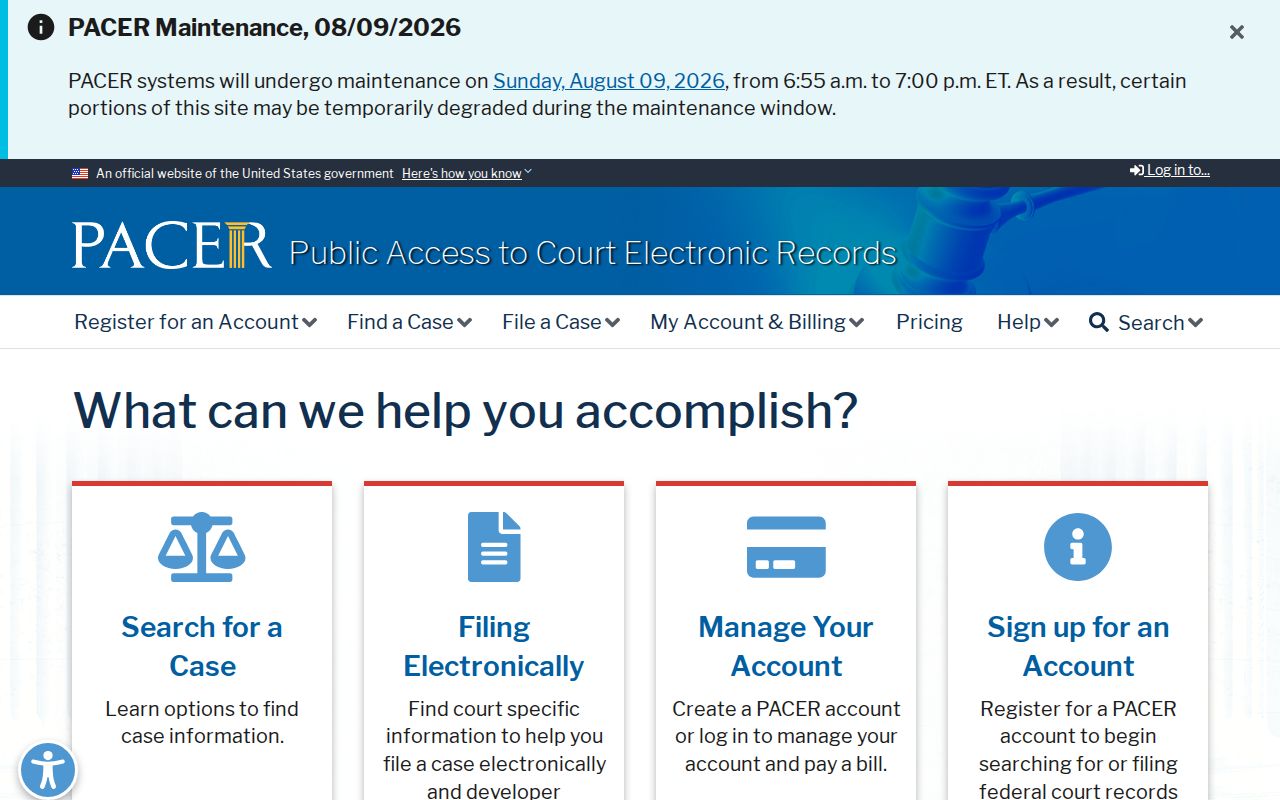
PACER is a federal docket service, not a Duval County jail or state court search. The correct sequence is local jail, state prison, or federal custody based on the person's actual status.
Duval County Federal Record Review
The FBI Identity History Summary is a subject-only review option for a person's own federal identity-history record. It can be requested through the electronic Departmental Order system or by mail with current fingerprints. The FBI charges $18, apart from fingerprint or channeler costs, and does not offer expedited service. This product is distinct from PACER, which searches federal court dockets, and from DPS CCH, which is the Texas state repository.
The FBI electronic request portal is shown below.
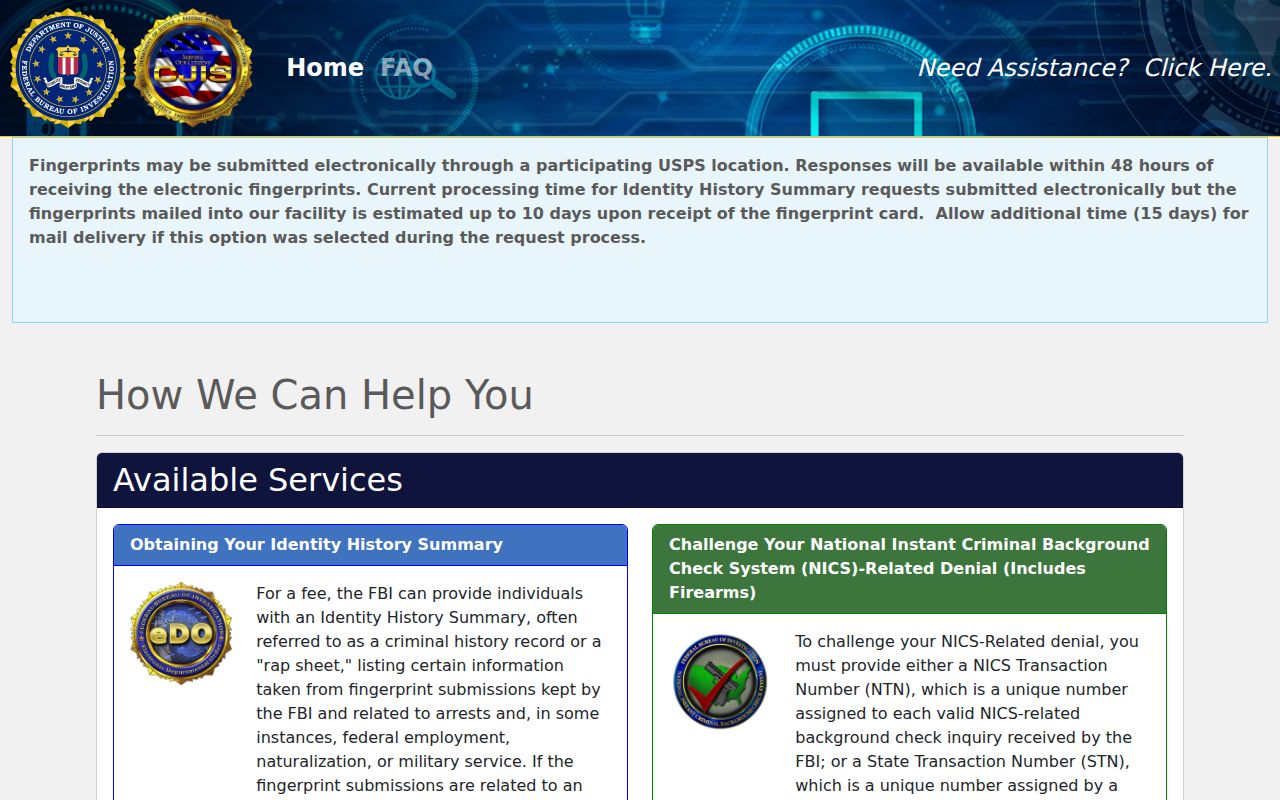
A fingerprint submission reduces same-name confusion, but it does not turn an FBI result into a certified Duval County judgment. Obtain local court documents from the clerk that owns the cause.
Duval County DPS Record Limits
DPS warns that its public result is not the same as a complete personal rap sheet. Class B misdemeanors and more serious arrests are part of the standard Texas reporting chain, while Class C arrest reporting is optional. A low-level municipal matter can therefore exist locally without appearing in the same way in state CCH. A prosecutor may also reduce or decline an arrest-time charge, making the court judgment the best source for the final outcome.
The DPS criminal-history FAQ explains public access, reporting gaps, and state review options.
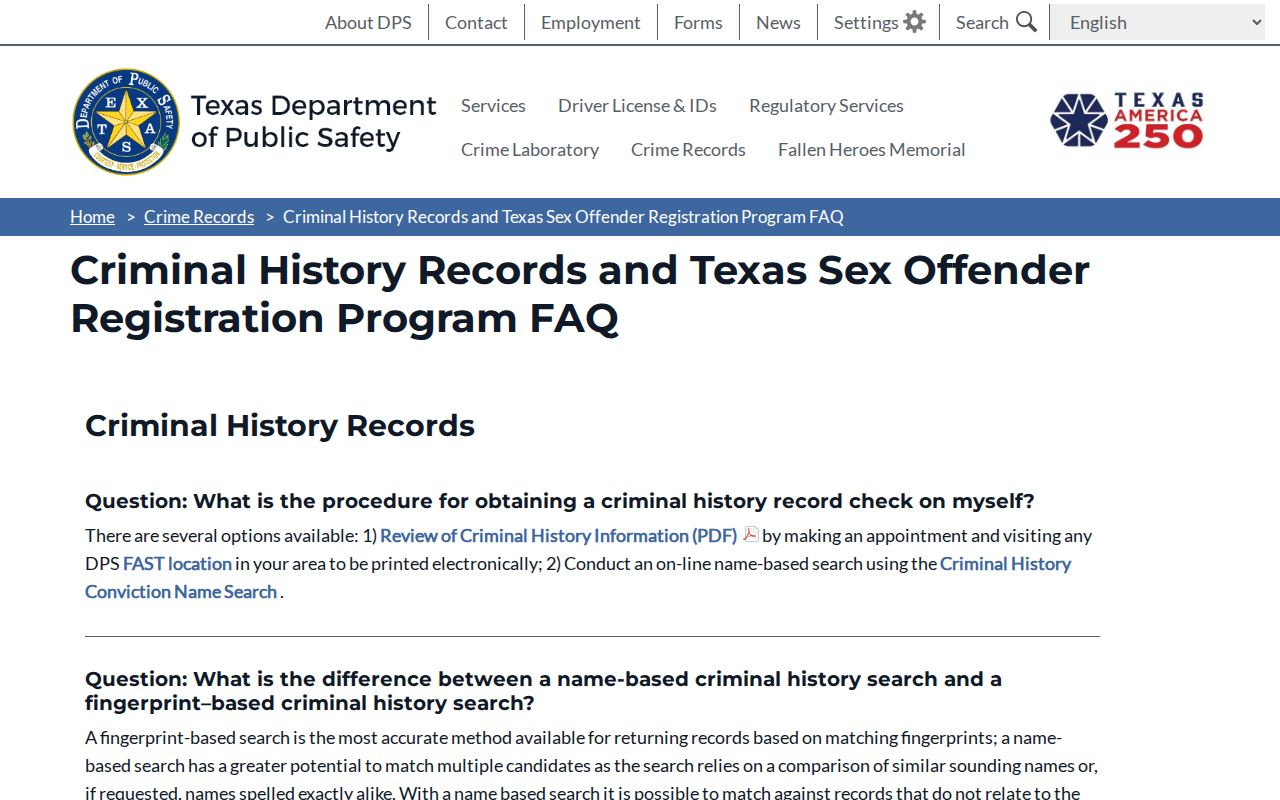
Use a public name result as one official layer. Match it to the Duval County clerk's certified disposition before relying on the case outcome.
City-by-City Criminal Records in Duval County
Duval County has three incorporated cities: San Diego, Freer, and Benavides. Their routes differ. San Diego contains the county courthouse and jail. Freer has the strongest independent police and municipal-court web presence. Benavides relies more heavily on agency verification, phone calls, clerk counters, and written requests. Pick the city where the event occurred, then follow the file to the county or state office if the case moved.
San Diego Record Check
County-seat routing for courthouse, sheriff, jail, and docket records.
Freer Record Check
Freer Police Department requests and Municipal Court records at 902 E. Riley Street.
Benavides Record Check
Agency verification plus sheriff and county-clerk fallback routes.